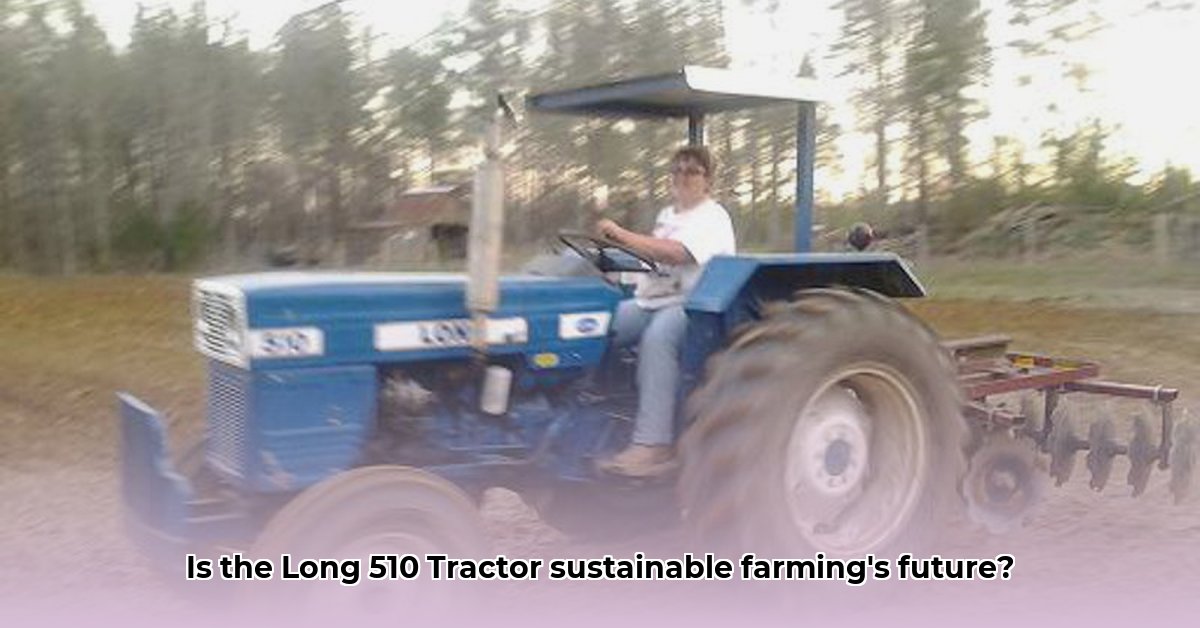
The Long 510 tractor, a workhorse of the late 1970s and 1980s, presents a fascinating case study in sustainable agriculture. Its resurgence reflects a growing interest in simpler, more resilient farming technologies. But can this vintage machine truly contribute to modern sustainable practices? This analysis explores its capabilities and limitations, considering fuel efficiency, maintenance, and environmental impact. For more tractor comparisons, see this helpful resource.
Power and Performance: Evaluating the Long 510's Capabilities
The Long 510 boasted approximately 48.5 PTO horsepower (power take-off horsepower, the power available to drive implements), making it suitable for smaller farms. However, its relatively low power output compared to modern tractors raises questions about its efficiency. While lower power could theoretically translate to lower fuel consumption per task, we lack precise data on its fuel efficiency. This is a crucial gap in assessing its sustainability. Is the reduced power offset by lower fuel needs, or does it simply mean longer working hours to complete the same tasks? This needs further investigation.
The Sustainability Question: Fuel, Emissions, and Soil Compaction
Fuel efficiency is paramount in sustainable agriculture. Older engines, like the Long 510's, generally exhibit lower efficiency than their modern counterparts, resulting in higher fuel consumption and a larger carbon footprint. The absence of comprehensive data on its greenhouse gas emissions makes a complete environmental assessment challenging. How do its emissions compare to modern, fuel-efficient tractors performing similar tasks? Research addressing this critical question is lacking.
Beyond fuel, soil compaction is another sustainability concern. Heavy machinery can damage soil structure, hindering plant growth. The Long 510's weight and tire design might contribute to this problem, although research quantifying its soil compaction impact is needed. What specific impact did the Long 510’s weight and tire design have on different soil types? This data is crucial to a complete analysis.
Maintenance, Parts Availability, and Long-Term Viability
Sustainable farming necessitates equipment longevity and ease of maintenance. The Long 510's age presents challenges. Finding replacement parts can be difficult, especially in remote areas, leading to increased downtime and repair costs. These factors can offset any potential fuel savings. How can farmers mitigate these challenges to maximize the Long 510's lifespan and minimize disruptions? Practical strategies for parts sourcing and preventative maintenance are essential considerations.
Dr. Anya Sharma, Agricultural Engineer at the University of California, Davis, notes: "The lifespan of older agricultural equipment is highly dependent on maintenance. Preventive maintenance is crucial, but the availability of parts is a major limiting factor for the long-term viability of vintage tractors like the Long 510."
Comparing the Long 510 to Modern Tractors: A Comprehensive Analysis
To accurately assess its sustainability, the Long 510 must be compared to contemporary tractors with similar power outputs. This comparison must consider fuel consumption per hour/acre, greenhouse gas emissions per hectare, and soil compaction levels. Only with this detailed analysis can we objectively evaluate its role in sustainable agriculture. What metrics can be used to fairly compare the performance and sustainability impact of the Long 510 with modern tractors? A standardized approach is vital for meaningful comparisons.
The Urgent Need for Further Research
In conclusion, a comprehensive study evaluating the Long 510's fuel efficiency, emissions, long-term costs (including parts and repairs), and soil compaction impact is crucial. This research would benefit farmers and researchers alike, informing decisions about sustainable farming practices and the role of vintage machinery. What specific research questions should be prioritized to fully understand the Long 510's long-term sustainability? A prioritized research agenda is essential.
Assessing the Long 510's Fuel Efficiency for Sustainable Farming: A Practical Guide
This section provides a practical framework for assessing the fuel efficiency of a Long 510 tractor, considering its application within sustainable farming practices.
1. Establish Baseline Fuel Consumption: Accurately record fuel usage during various farming tasks (e.g., plowing, tilling). Note the duration and type of work. This establishes a baseline for comparison.
2. Optimize Engine Performance: Ensure regular maintenance, including proper lubrication, tune-ups, and correct tire inflation. These steps can significantly improve fuel efficiency.
3. Refine Operational Practices: Efficient driving habits (avoiding aggressive acceleration and braking) can reduce fuel consumption. Proper implement adjustment also minimizes waste.
4. Comprehensive Comparison with Modern Tractors: Once optimized, compare your data with that of comparable modern tractors performing the same tasks, accounting for differences in horsepower and implement size.
5. Consider Strategic Modernization (When Appropriate): Modern technologies like GPS guidance systems can enhance precision and reduce fuel waste, but only if cost-effective. Ensure compliance with all relevant safety and modification regulations. What proportion of fuel savings can be achieved through the integration of modern technologies? Quantifiable data is necessary here.
Conclusion: A Nuanced Perspective on the Long 510's Role
The Long 510, while a reliable machine, requires a nuanced assessment within the context of modern sustainable agriculture. Its potential for cost savings in maintenance and repairs needs to be weighed against potentially higher fuel consumption and environmental impact. Further research and a holistic cost-benefit analysis are vital for determining its true viability. What are the key factors influencing the Long 510's sustainability profile in different farming contexts? A detailed analysis of these factors is essential.